
Electrical and Solar PV Inspections: Intervals and Obligations (Decree 508/2009)
03.06.2026
.
Is your inspection deadline approaching — or are you not even sure whether it passed long ago? An electrical installation inspection is not just a box to tick in the law. It is the difference between peace of mind and the risk of fire, injury or a rejected insurance claim. Let’s clear it up — without the legal jargon.
Quick answer: a standard masonry building needs an electrical installation inspection once every 5 years, a school or hotel once every 3 years and premises for more than 250 people once every 2 years. In demanding environments (humidity, dust, chemicals), shorter intervals apply.
What an inspection is and why it matters
What we commonly call an “inspection” is, in legal terms, a professional examination and professional test of an electrical installation. Put simply: an independent certified inspection technician checks whether your electrical installation is still safe and issues an inspection report. That report is your proof that everything is in order — both for the labour inspectorate and for your insurer.
And it is no formality. Old wiring, overloaded circuit breakers and damaged insulation are among the most common causes of building fires. An inspection catches them before they cause damage.
Inspection intervals for electrical installations
How often you must carry out an inspection is set by Slovak Decree No. 508/2009 Coll., depending on the type of building (Annex No. 8, Table A):
| Type of building | Interval |
|---|---|
| Masonry residential and office building | 5 years |
| School, kindergarten, nursery, hotel, accommodation and recreational facility | 3 years |
| High-rise buildings and assembly spaces for more than 250 people (shopping centres, stations) | 2 years |
| Buildings made of combustible materials (class C–F) | 2 years |
| Mobile and transportable equipment | 1 year |
| Temporary installation (construction site, exhibition) | 6 months |
Inspection intervals for lightning protection systems
Lightning protection systems (protection against atmospheric electricity) follow their own intervals:
| Lightning protection by protection level | Interval |
|---|---|
| Protection level I and II | 2 years |
| Protection level III and IV | 4 years |
| Building with an explosion hazard area | 1 year |
Important: the environment matters too
The type of building is only half the story. The decree also takes external influences into account — humidity, dust, corrosive environments or temperature (Table B). And one simple rule applies:
The shorter of the two intervals always applies. So if you have an office building (5 years) but with humid or dusty operations, the actual inspection interval may be considerably shorter.
When you need an inspection outside the regular schedule
Beyond the regular intervals, an inspection is also mandatory:
- after installation, before first commissioning (the so-called initial inspection),
- after a reconstruction or repair that changed the circuit protection,
- after the equipment has been out of service for more than one year,
- if a labour inspector has prohibited its use.
What you risk without a valid inspection
A missing or expired inspection can cost you far more than the inspection itself. You face a fine from the labour inspectorate, serious problems with an insurance claim in the event of damage and, above all, a real risk of fire or injury. An inspection is therefore the cheapest insurance your electrical installation can have.
Inspections of photovoltaic plants (PV)
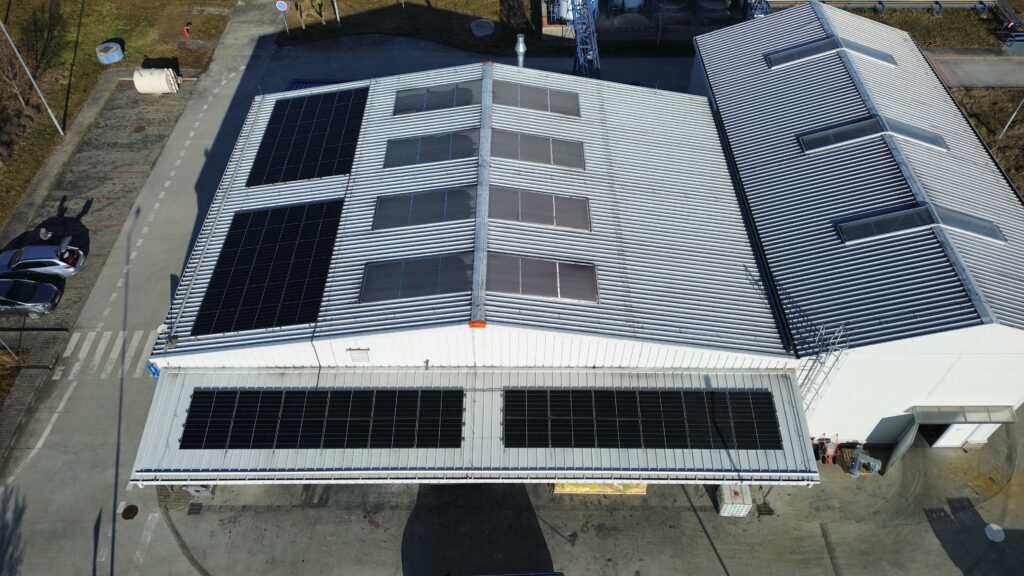
A photovoltaic plant is an electrical installation — so professional examinations and tests apply to it just as they do to any other installation. The initial inspection is in fact a condition for connection to the distribution grid and often for drawing a subsidy as well. Regular periodic inspections then follow.
A PV inspection has its specifics — both the direct current (DC) and alternating current (AC) sides are checked:
- DC side and strings — voltages, polarity, insulation condition and the state of MC4 connectors.
- Inverter and AC side — circuit protection, protective devices and correct grid connection.
- Surge and lightning protection — surge protective devices (SPD), earthing and lightning protection.
- Thermal imaging check — reveals hot spots on panels and connections before they cause a failure.
The procedures are based on the STN EN 62446-1 standard. The periodic inspection interval is determined by the building type and environment (just as in the tables above) — a rooftop PV system on a building generally follows that building’s interval, and a demanding environment shortens it.
Why not to put it off: a damaged connector or a DC arc are among the most common causes of PV system fires. Regular inspections protect not only safety but also your production and the payback of your investment.
You can find more about this service on the Solar service and inspections page.
Frequently asked questions
Who can carry out an electrical installation inspection?
Only an inspection technician holding a valid certificate of professional competence under Slovak Decree 508/2009. A regular electrician cannot issue an inspection report.
How long is an inspection report valid?
Until the next statutory deadline for your type of building and environment (see the tables above). Once it expires, the inspection must be repeated.
What if the inspection reveals a defect?
The inspection report will list the deficiencies with priorities. These must be remedied — at Energovision we can fix them for you straight away and issue a certificate of remediation.
Do inspections also apply to photovoltaics and EV chargers?
Yes. Photovoltaic systems and electric vehicle charging stations have their own inspection requirements and are part of safe operation.
Need an inspection from professionals?
At Energovision we carry out professional examinations and tests of electrical installations and lightning protection systems in line with current legislation — and we can also fix any deficiencies we find. Take a look at our Electrical inspections service, or simply get in touch and we will schedule a date that does not disrupt your operations.
Other articles